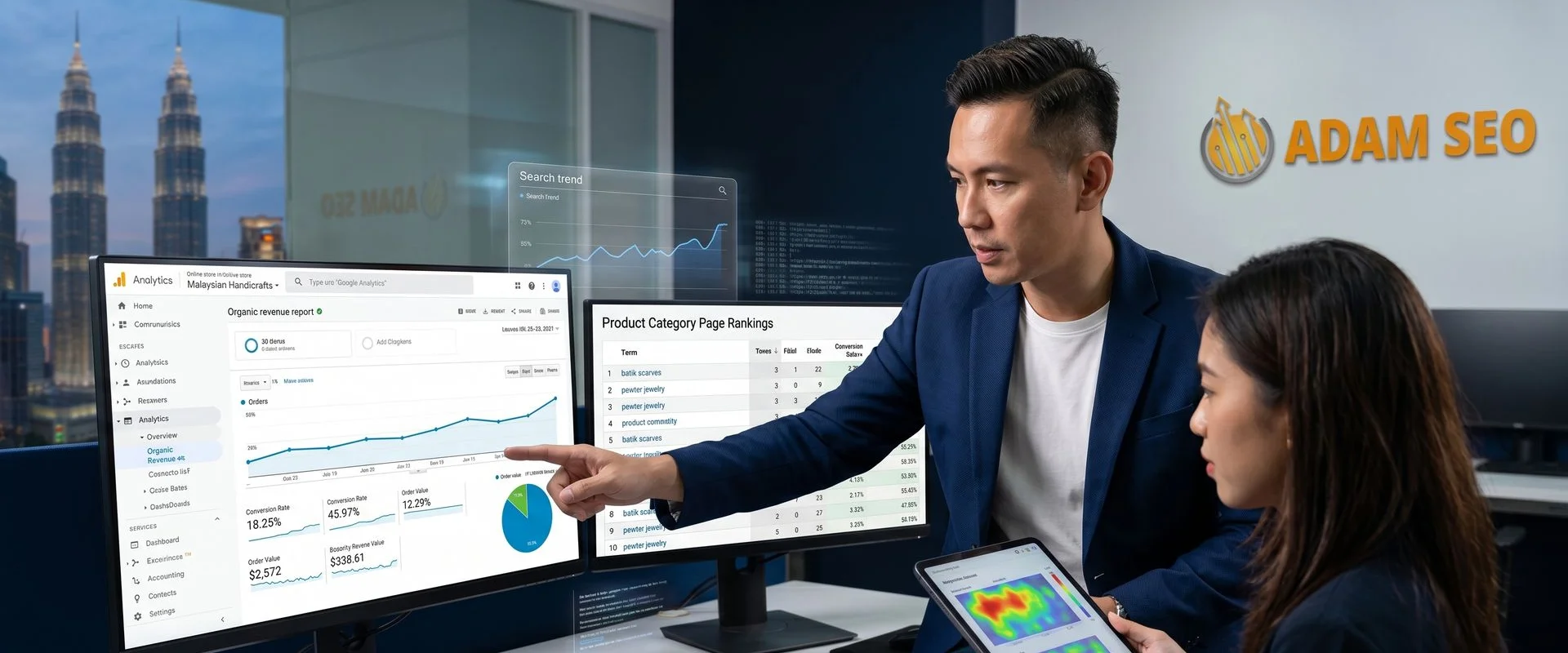
Adam SEO is a Kuala Lumpur-based e-commerce SEO consultancy founded in 2011 by Adam Yong. We help Malaysian online stores turn organic search into measurable revenue using our 4-Stage, 9-Step SEO Framework.
If your product pages rank but sales stay flat, the problem is usually a mix of weak category page targeting, technical store issues, and poor conversion alignment. Our team fixes all three.
Below is the exact process we use to audit, optimise, and grow revenue for Shopify, WooCommerce, Magento, and SiteGiant stores across Malaysia.
What is E-commerce SEO?
E-commerce SEO is the work of growing organic revenue for online stores by improving category page rankings, product page relevance, technical store health, and the conversion experience around them. It is closer to a revenue strategy than a simple traffic strategy. For a Malaysian online store, the highest-value rankings are usually category pages tied to commercial intent.
Think “men’s running shoes Malaysia” or “Shopify product page SEO”. Product pages matter too, but they are rarely the top demand layer for high-volume buying terms. Malaysia saw its e-commerce gross merchandise value jump by 47.6% to reach US$17 billion in 2025.
That massive growth means local buyers are actively searching for what you sell right now. Malaysian online shoppers compare products across Shopify, WooCommerce, and local platforms like SiteGiant and EasyStore before buying. Our approach connects three vital pillars to help you capture that demand:
- Mapping the right store pages to actual buyer demand through category and collection page optimization.
- Running a thorough technical SEO audit so Google can crawl and index every product.
- Designing a conversion rate optimization experience that turns visitors into paying customers.
Recent regional market studies show that products displaying 50 or more reviews convert at rates three to four times higher than those without. This simple detail highlights why user experience matters just as much as keywords. We always look at the full picture to make sure every click counts.
Why Online Stores Need a Specialist Approach
A regular service business website might have ten to twenty important pages. An online store can have hundreds or thousands of category, sub-category, product, and content pages. Each one introduces unique opportunities and hidden risks for crawling, duplicate content, internal linking, and conversion alignment.
E-commerce SEO also lives or dies by specific technical elements that standard sites rarely use. These critical components include schema markup, product reviews, faceted navigation, canonical tag strategy, and platform-specific quirks. Shopify alone commands over 10% of the global market with millions of active stores in 2025, and it behaves quite differently from WooCommerce or Magento.
A local platform like SiteGiant has its own unique constraints and routing rules. Many Malaysian sellers also run storefronts on Lazada and Shopee alongside their own website, which creates duplicate content risks that need careful canonical management. Our engagement is specifically calibrated to your chosen platform so the work fits how your store actually operates.
| SEO Element | Regular Website | E-commerce Store |
|---|---|---|
| Page Volume | 10 to 50 pages | Hundreds to thousands of SKUs |
| Success Metric | Lead form submissions | Direct organic revenue |
| Technical Focus | Fast loading speeds | Canonical tags for product filters |
Common faceted navigation filters for size or colour can accidentally generate thousands of duplicate URLs if you do not use canonical tags properly. This mistake burns up your crawl budget fast.
Finally, e-commerce SEO is judged by organic revenue, not vanity traffic. A keyword win that does not produce actual orders is simply not a win. That core principle shapes both our keyword priorities and ongoing reporting.
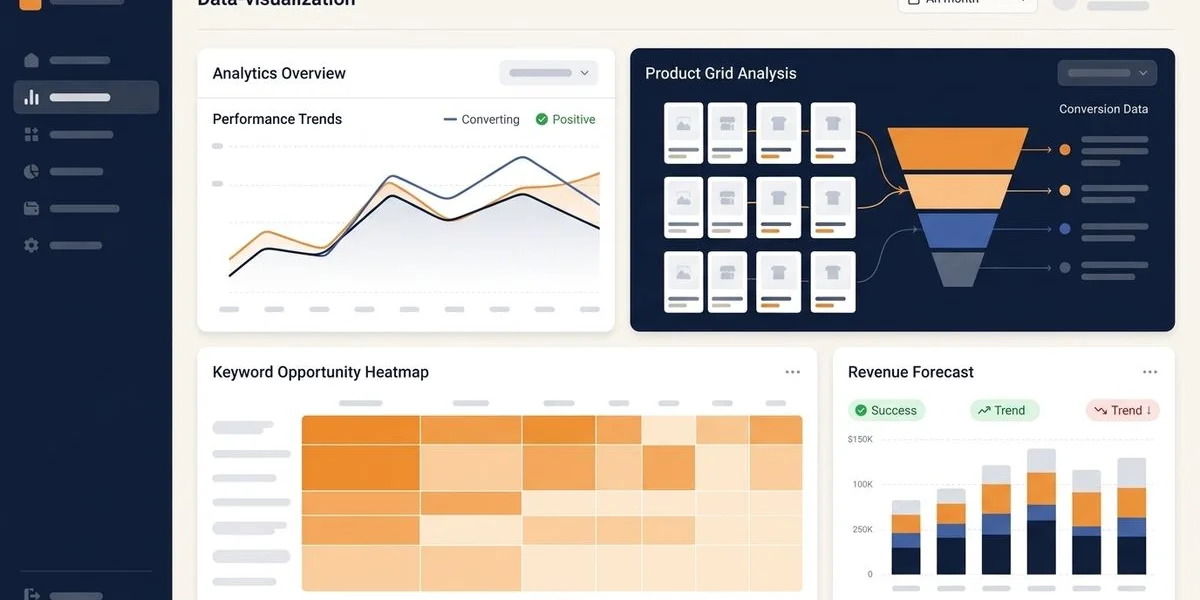
Our 4-Stage Optimisation Process for Online Stores
Adam SEO starts with a thorough demand mapping exercise. That process means matching your catalogue, margins, and historical conversion data to commercial keyword demand. The clear goal is to find the categories and products where ranking growth would produce the most revenue, not just the most traffic.
Auditing the Technical Base
Our team then runs a full technical SEO audit covering crawl, indexation, schema, canonical, duplicate content, speed, and faceted navigation issues that suppress organic growth on Google. Did you know that smartphones drive nearly three-quarters of e-commerce transactions in Malaysia as of 2025? A progressive web app that loads under three seconds protects your conversion rates even on congested mobile networks.
We prioritise these speed fixes early.
Building Authority and Conversions
With priorities set and a clean technical base, we move into ongoing content and authority work. Category page optimisation, product page improvements, supporting content, internal linking, and targeted link building together compound rankings over time. Industry data shows that a successful e-commerce SEO campaign in Malaysia typically requires 9 to 12 months to show a strongly positive return on investment.
Conversion rate optimization runs in parallel during this growth phase. Converting more of your existing traffic is often faster than adding new traffic. We help you implement trusted local payment methods like FPX and GrabPay alongside clear return policies to reduce friction at checkout.
How Much Does Store SEO Cost in Malaysia?
E-commerce SEO is typically delivered as a Premium or Elite retainer from RM 4,500 per month (2026 pricing). The final price naturally fluctuates based on a few key factors:
- Total SKU count and category size.
- The specific platform setup requirements.
- Required monthly content volume.
- The scope of conversion rate optimisation.
Market surveys from 2026 show that Malaysian agencies charge anywhere from RM 1,200 to over RM 10,000 monthly for enterprise-level stores. We work with e-commerce businesses across Kuala Lumpur, Petaling Jaya, Cyberjaya, Penang, and Johor Bahru. Our pricing reflects the depth of technical expertise required to manage thousands of moving parts safely.
For more details on our specific retainer scope and pricing structures, see our Malaysian SEO pricing guide.
How We Compare
| Feature | Typical Provider | Adam SEO |
|---|---|---|
| Primary KPI | Keyword rankings | Organic revenue and conversion rate |
| CRO included | Separate engagement | Built into every retainer |
| Platform expertise | Generic advice | Shopify, WooCommerce, Magento, SiteGiant audits |
| Reporting cadence | Quarterly PDF | Monthly revenue-tied report |
Choosing the Right SEO Partner for Your Store
Look for a partner who can explain category architecture, schema markup, and indexation in language a store owner can act on. For example, your partner should know exactly how to implement “Product” structured data so your prices and stock levels show up directly in Google search results. Look for clear monthly reporting that ties rankings directly to actual revenue.
“A great SEO partner focuses on your profit margins, not just the number of visitors hitting your homepage.”
You should also demand absolute honesty about timelines. Durable e-commerce SEO growth is measured in months, not weeks. The regional market saw massive consolidation in 2025, which means competing against big players requires a steady, calculated strategy.
If you are evaluating Shopify specifically, our Shopify SEO guide for Malaysian stores covers all the platform-specific priorities you need to know. If you are weighing organic search against paid acquisition channels, e-commerce SEO vs paid ads explains the exact financial tradeoffs.
Ready to grow your online store revenue? Contact Adam SEO for a discovery audit and find out where your biggest organic revenue opportunities are.